Introduction to AI Inventory Management Architecture

Yes, AI inventory management can reduce stockouts by up to 30% and overstocking by up to 25% through predictive analytics and machine learning algorithms.
Benefits of AI in Inventory Management
AI can automate up to 80% of inventory management tasks, freeing up staff for strategic decision-making. By using robotic process automation and machine learning, AI can streamline tasks such as data entry, inventory tracking, and reporting, allowing businesses to focus on higher-value activities like demand forecasting and supply chain optimization. For example, AI-powered inventory management systems can automatically track inventory levels, detect anomalies, and send alerts to staff when action is required. This can help businesses respond quickly to changes in demand or supply, reducing the risk of stockouts or overstocking.Common Challenges in Implementing AI Inventory Management
Data quality issues and lack of standardization are the primary obstacles to successful AI implementation in inventory management. Due to inconsistent data formats and inadequate data governance, businesses may struggle to integrate their data sources, leading to inaccurate or incomplete data that can compromise the effectiveness of AI algorithms. For instance, if a business has multiple data sources with different formats and structures, it may be difficult to combine them into a single, cohesive dataset that can be used for AI analysis. To overcome this challenge, businesses must prioritize data governance and standardization, ensuring that their data is accurate, complete, and consistent across all sources.Design Patterns for AI Inventory Management Architecture
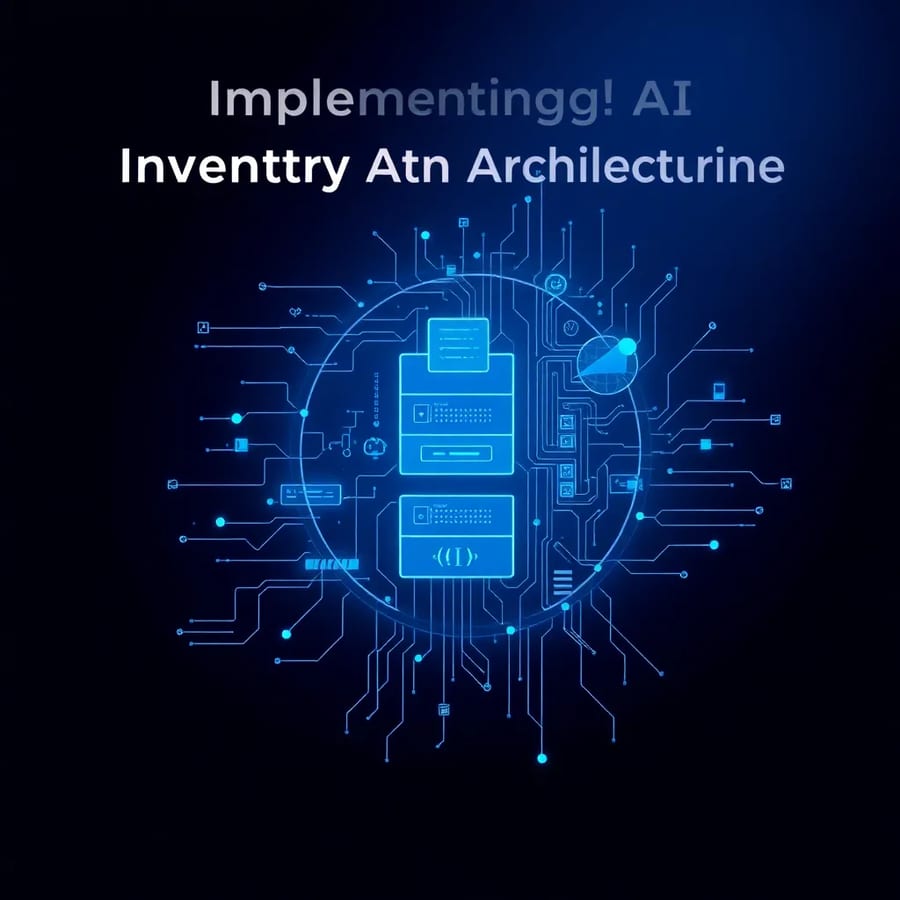
Microservices Architecture for AI Inventory Management
Microservices architecture can improve scalability and flexibility in AI inventory management systems. By breaking down the system into smaller, independent services, businesses can develop and deploy each service separately, reducing the risk of system downtime and improving overall agility. For instance, a microservices architecture can allow businesses to develop a separate service for demand forecasting, another for inventory tracking, and another for supply chain optimization, each of which can be deployed and updated independently. This can help businesses respond quickly to changes in demand or supply, reducing the risk of stockouts or overstocking.Event-Driven Architecture for Real-Time Inventory Insights
Event-driven architecture can provide real-time inventory insights and enable proactive decision-making. By using event-driven programming and streaming data processing, businesses can create a system that can respond quickly to changes in inventory levels, demand, or supply. For example, an event-driven architecture can allow businesses to set up real-time alerts and notifications when inventory levels fall below a certain threshold, enabling staff to take action quickly to replenish stock or adjust production schedules.Agentic AI Components for Autonomous Inventory Management
Agentic AI components can enable autonomous inventory management and improve supply chain resilience. By using autonomous agents and machine learning algorithms, businesses can create a system that can make decisions independently, without human intervention. For instance, agentic AI components can allow businesses to create a system that can automatically detect anomalies in inventory levels or demand, and take action to correct them, reducing the risk of stockouts or overstocking.Implementation Blueprint for AI Inventory Management
Phase 1: Data Preparation and Integration
Data preparation and integration are critical to successful AI inventory management implementation. By applying data governance and data quality best practices, businesses can ensure that their data is accurate, complete, and consistent across all sources. For instance, businesses can start by conducting a thorough data audit, identifying gaps and inconsistencies in their data, and developing a plan to address them. This can involve data cleansing, data transformation, and data integration, as well as the development of data governance policies and procedures.Phase 2: AI Model Development and Training
AI model development and training require careful consideration of data quality, model complexity, and training datasets. By using machine learning frameworks and automated machine learning tools, businesses can develop and train AI models that are tailored to their specific needs and goals. For example, businesses can use techniques such as cross-validation and walk-forward optimization to evaluate the performance of their AI models, and refine them as needed to improve accuracy and reduce bias.Case Studies and Success Stories in AI Inventory Management

Conclusion and Next Steps