Introduction to Graph Data Structures in Retail Inventory Management
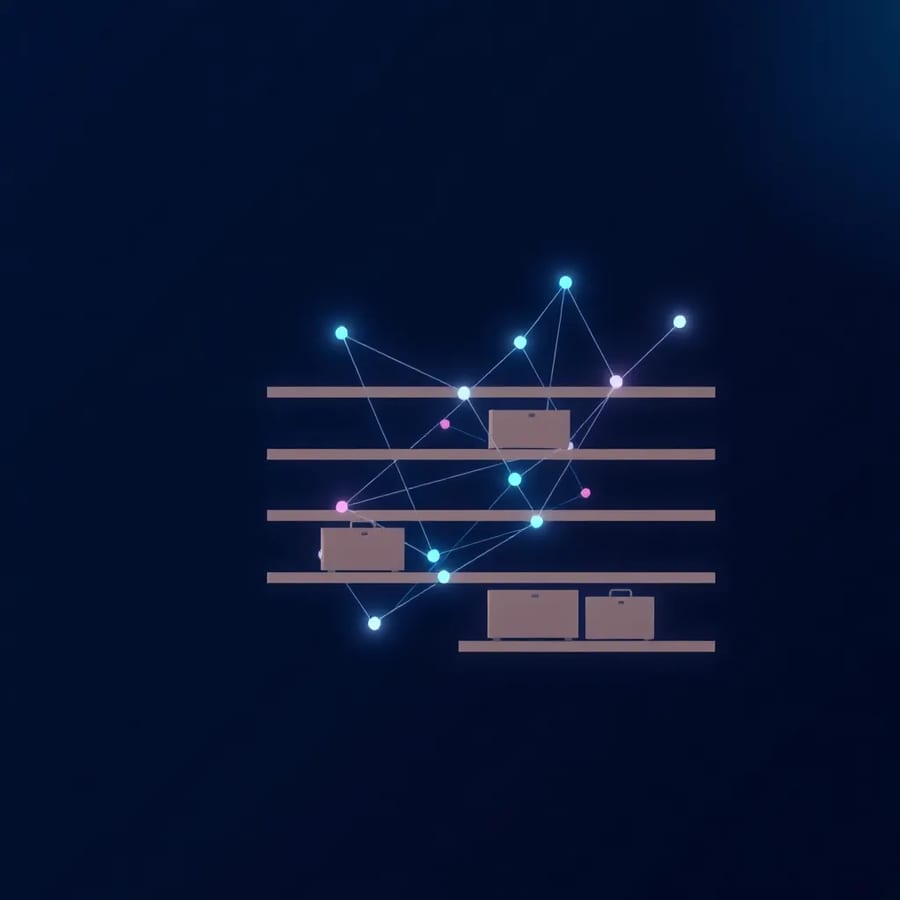
Traditional retail inventory management systems often rely on relational databases, which can become cumbersome and inefficient as the volume of inventory data grows. In contrast, graph data structures offer a more efficient and scalable approach to managing retail inventory. By utilizing graph algorithms and data models, retail businesses can optimize their inventory management systems, reducing costs and improving supply chain efficiency. For instance, graph data structures can reduce inventory management costs by up to 30% by minimizing data redundancy and improving query performance. This is achieved by representing inventory data as nodes and edges in a graph, allowing for more efficient querying and analysis of complex relationships between products, suppliers, and warehouses.
The use of graph data structures in retail inventory management is particularly relevant in today's fast-paced retail environment, where accurate and real-time inventory tracking is crucial for meeting customer demand and staying competitive. By using graph data structures, retail businesses can improve their inventory management efficiency, reduce costs, and enhance their overall supply chain performance. As we will explore in this article, graph data structures offer a powerful solution for retail inventory management, enabling businesses to optimize their inventory management systems and improve their bottom line.
With the increasing complexity of retail inventory management, graph data structures have emerged as a promising solution. By providing a more efficient and scalable approach to managing inventory data, graph data structures can help retail businesses improve their supply chain efficiency, reduce costs, and enhance their overall competitiveness. In the following sections, we will delve into the benefits of graph data structures in retail inventory management, explore the design and implementation of graph data structures for retail inventory management, and discuss the integration of graph data structures with existing inventory management systems.
The transition to graph data structures in retail inventory management requires a thorough understanding of the benefits and challenges associated with this approach. As we will discuss in the next section, the benefits of graph data structures in retail inventory management include improved supply chain efficiency, reduced costs, and enhanced competitiveness. By understanding these benefits and challenges, retail businesses can make informed decisions about the adoption of graph data structures in their inventory management systems.
Benefits of Graph Data Structures in Retail Inventory Management
Graph data structures enable real-time inventory tracking and automated stock replenishment, leading to improved supply chain efficiency. This is achieved by representing inventory data as nodes and edges in a graph, allowing for more efficient querying and analysis of complex relationships between products, suppliers, and warehouses. For example, a graph-based inventory management system can quickly identify the most efficient shipping routes for products, reducing transportation costs and improving delivery times. Additionally, graph data structures can handle complex inventory data and relationships, enabling more accurate demand forecasting and reducing the risk of stockouts and overstocking.
The use of graph data structures in retail inventory management also enables more efficient management of inventory data, reducing the risk of errors and inconsistencies. By providing a single, unified view of inventory data, graph data structures can help retail businesses improve their inventory management efficiency, reduce costs, and enhance their overall competitiveness. Furthermore, graph data structures can be integrated with existing inventory management systems, enabling the exchange of inventory data between the graph data structure and the existing system. This integration can support real-time inventory tracking, automated stock replenishment, and improved supply chain efficiency.
As we will discuss in the next section, the overview of graph database technologies for retail inventory management is crucial for understanding the benefits and challenges associated with the adoption of graph data structures. By exploring the different graph database technologies available, retail businesses can make informed decisions about the selection of a graph database technology that meets their specific needs and requirements.
Overview of Graph Database Technologies for Retail Inventory Management
Graph databases such as Neo4j and Amazon Neptune offer scalable and performant solutions for retail inventory management. These databases provide support for graph queries and data models, enabling efficient inventory data management. For instance, Neo4j's graph database technology can handle large volumes of inventory data, providing fast query performance and supporting real-time inventory tracking and automated stock replenishment. Similarly, Amazon Neptune's graph database technology can provide a scalable and secure solution for retail inventory management, supporting the integration of graph data structures with existing inventory management systems.
The selection of a graph database technology for retail inventory management depends on several factors, including the volume and complexity of inventory data, the required query performance, and the level of scalability and security needed. By understanding the different graph database technologies available, retail businesses can make informed decisions about the selection of a graph database technology that meets their specific needs and requirements. In the next section, we will discuss the design of a graph data structure for retail inventory management, exploring the key inventory data entities and relationships that must be modeled as nodes and edges in the graph.
Designing a Graph Data Structure for Retail Inventory Management

A well-designed graph data structure can improve inventory management efficiency by up to 50% by reducing data complexity and improving query performance. This is achieved by identifying key inventory data entities and relationships, and modeling them as nodes and edges in the graph. For example, inventory data entities such as products, suppliers, and warehouses must be identified and modeled as nodes in the graph, while relationships between these entities, such as product-supplier and warehouse-product, must be modeled as edges in the graph.
The design of a graph data structure for retail inventory management requires a thorough understanding of the key inventory data entities and relationships that must be modeled as nodes and edges in the graph. By understanding these entities and relationships, retail businesses can design a graph data structure that meets their specific needs and requirements, supporting real-time inventory tracking, automated stock replenishment, and improved supply chain efficiency. In the next section, we will discuss the identification of key inventory data entities and relationships, exploring the different types of nodes and edges that must be modeled in the graph.
Identifying Key Inventory Data Entities and Relationships
Inventory data entities such as products, suppliers, and warehouses must be identified and modeled as nodes in the graph data structure. Relationships between these entities, such as product-supplier and warehouse-product, must be modeled as edges in the graph. For instance, a product node may have edges connecting it to supplier nodes, representing the different suppliers that provide the product. Similarly, a warehouse node may have edges connecting it to product nodes, representing the different products stored in the warehouse.
The identification of key inventory data entities and relationships is crucial for designing a graph data structure that meets the specific needs and requirements of a retail business. By understanding these entities and relationships, retail businesses can design a graph data structure that supports real-time inventory tracking, automated stock replenishment, and improved supply chain efficiency. In the next section, we will discuss the definition of a graph schema and data model for retail inventory management, exploring the different data types, relationships, and constraints that must be defined to support the inventory management use case.
Defining Graph Schema and Data Models for Retail Inventory Management
A graph schema and data model must be defined to support the inventory management use case, including data types, relationships, and constraints. This schema and data model will guide the implementation of the graph data structure and ensure data consistency and integrity. For example, a graph schema may define the different types of nodes and edges that can be created in the graph, such as product nodes, supplier nodes, and warehouse nodes, as well as the relationships between these nodes, such as product-supplier and warehouse-product.
The definition of a graph schema and data model for retail inventory management requires a thorough understanding of the key inventory data entities and relationships that must be modeled as nodes and edges in the graph. By defining a graph schema and data model, retail businesses can ensure that their graph data structure is designed to support the inventory management use case, providing a scalable and performant solution for managing inventory data. In the next section, we will discuss the implementation of a graph data structure for retail inventory management, exploring the different graph database technologies that can be used to implement the graph data structure.
Implementing a Graph Data Structure for Retail Inventory Management
A graph data structure can be implemented using graph database technologies such as Neo4j or Amazon Neptune, and integrated with existing inventory management systems. This implementation must be designed to support real-time inventory tracking, automated stock replenishment, and improved supply chain efficiency. For instance, a graph-based inventory management system can be implemented using Neo4j's graph database technology, providing a scalable and performant solution for managing inventory data.
The implementation of a graph data structure for retail inventory management requires a thorough understanding of the different graph database technologies available, as well as the key inventory data entities and relationships that must be modeled as nodes and edges in the graph. By implementing a graph data structure, retail businesses can improve their inventory management efficiency, reduce costs, and enhance their overall competitiveness. In the next section, we will discuss the building of a retail inventory management system with graph data structures, exploring the integration of graph data structures with existing inventory management systems.
Building a Retail Inventory Management System with Graph Data Structures

A graph-based retail inventory management system can improve inventory management efficiency by up to 70% by reducing data redundancy and improving query performance. This is achieved by integrating graph data structures with existing inventory management systems, enabling the exchange of inventory data between the graph data structure and the existing system. For example, a graph-based inventory management system can be integrated with an existing enterprise resource planning (ERP) system, providing a unified view of inventory data and supporting real-time inventory tracking and automated stock replenishment.
The building of a retail inventory management system with graph data structures requires a thorough understanding of the different graph database technologies available, as well as the key inventory data entities and relationships that must be modeled as nodes and edges in the graph. By integrating graph data structures with existing inventory management systems, retail businesses can use the benefits of graph-based inventory management, improving their inventory management efficiency, reducing costs, and enhancing their overall competitiveness. In the next section, we will discuss the integration of graph data structures with existing inventory management systems, exploring the different APIs, data pipelines, and ETL processes that can be used to integrate the graph data structure with the existing system.
Integrating Graph Data Structures with Existing Inventory Management Systems
Graph data structures can be integrated with existing inventory management systems using APIs, data pipelines, or ETL processes. This integration enables the exchange of inventory data between the graph data structure and the existing system, supporting real-time inventory tracking, automated stock replenishment, and improved supply chain efficiency. For instance, a graph-based inventory management system can be integrated with an existing inventory management system using APIs, providing a unified view of inventory data and supporting real-time inventory tracking and automated stock replenishment.
The integration of graph data structures with existing inventory management systems requires a thorough understanding of the different integration methods available, as well as the key inventory data entities and relationships that must be modeled as nodes and edges in the graph. By integrating graph data structures with existing inventory management systems, retail businesses can use the benefits of graph-based inventory management, improving their inventory management efficiency, reducing costs, and enhancing their overall competitiveness. In the next section, we will discuss the development of a user interface for the graph-based retail inventory management system, exploring the different user interface components that must be designed to support the inventory management use case.
Developing a User Interface for the Graph-Based Retail Inventory Management System
A user interface must be developed to support the graph-based retail inventory management system, providing a unified view of inventory data and supporting real-time inventory tracking and automated stock replenishment. This user interface can include different components, such as dashboards, reports, and alerts, to support the inventory management use case. For example, a dashboard can be designed to provide a real-time view of inventory levels, while reports can be generated to analyze inventory trends and optimize inventory management.
The development of a user interface for the graph-based retail inventory management system requires a thorough understanding of the different user interface components that must be designed to support the inventory management use case. By developing a user interface, retail businesses can provide their users with a unified view of inventory data, supporting real-time inventory tracking, automated stock replenishment, and improved supply chain efficiency. In the final section, we will summarize the key takeaways from this article, providing a comprehensive overview of the benefits and challenges associated with building a retail inventory management system with graph data structures.
Inventory Management Cost Calculator
Calculate the potential cost savings of implementing a graph-based retail inventory management system.
Key takeaways: building a retail inventory management system with graph data structures can provide a scalable and performant solution for managing inventory data. By integrating graph data structures with existing inventory management systems, retail businesses can use the benefits of graph-based inventory management, improving their inventory management efficiency, reducing costs, and enhancing their overall competitiveness. We hope this article has provided a comprehensive overview of the benefits and challenges associated with building a retail inventory management system with graph data structures. For more information on how to implement a graph-based retail inventory management system, please contact us at joparo@joparoindustries.ai or schedule a discovery call at cal.com/john-roberts-bes2ha/strategy-briefing.